How do you find the confidence to return to work after years at home? Alicia Bond says it starts with remembering the skills you never lost. On this episode of On Her Way, I talked with Alicia Bond of Wren Advisors, a CPA and leadership coach who stepped out of a demanding finance career for about 10 years, returned just before the pandemic, and became the coach she wishes she'd had.
Quick takeaway: Your confidence may take a hit after a break, but your skills do not disappear. Get help showing what you have done.
From Public Accounting to AOL: Alicia Bond's Career Path
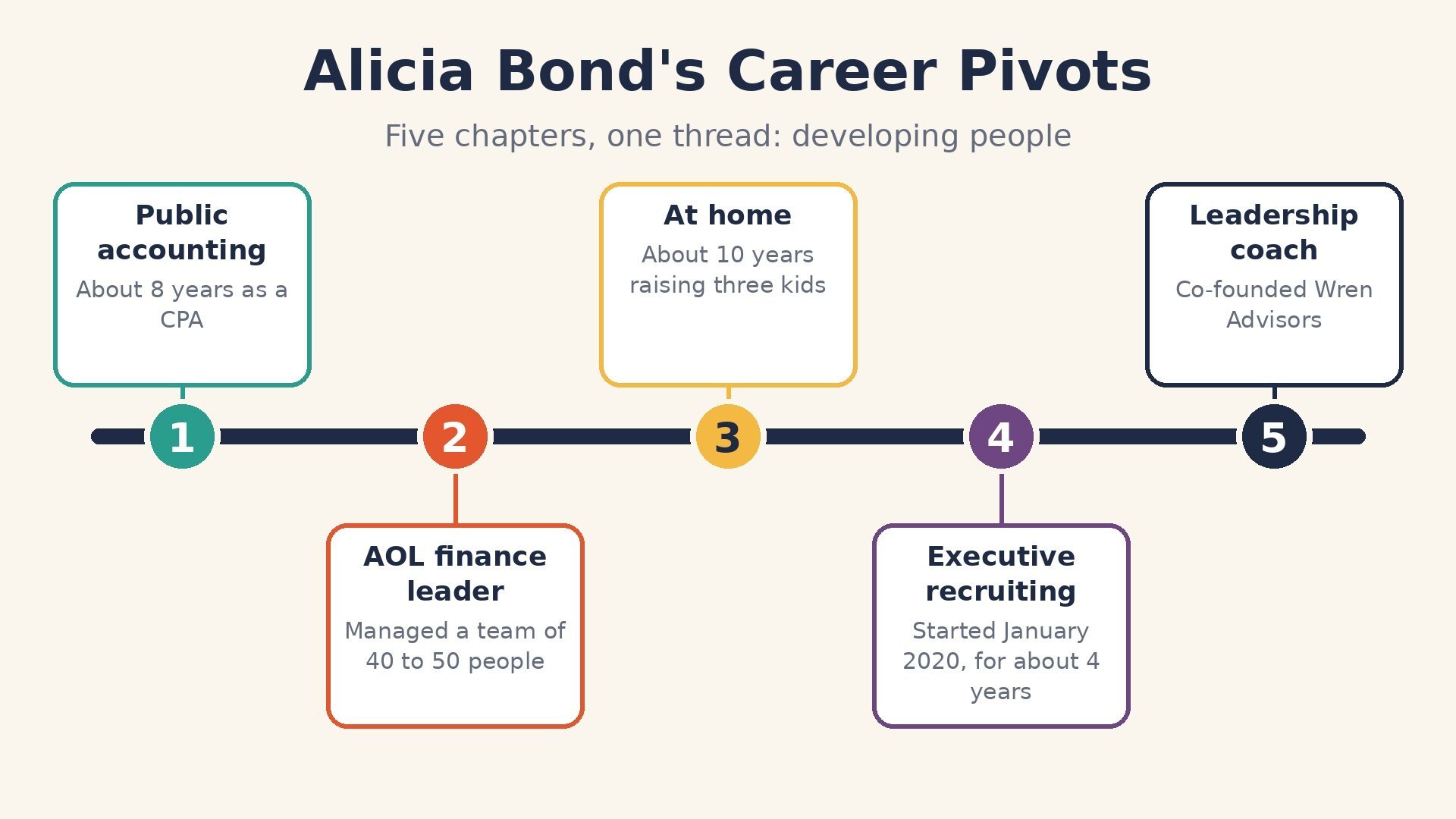
Alicia calls her career a twisty road. She started in public accounting, loved it, and stayed eight years. She noticed she worked for only one woman partner, and she could not see herself raising a family as a partner.
So she moved to AOL, at the very front of the internet. She oversaw financial reporting, international accounting, and SEC reporting. It was demanding and exciting, because nobody had thought about accounting for the internet before. She managed a team of 40 to 50 people.
Then came her third child, and she could not see the next step. She did not have a coach, because coaching was not a thing then. She had no mentors who showed how to be a mother of three and keep a demanding career.
Stepping Out to Raise Three Kids
When Alicia stepped out, she felt relief. Her husband was taking his company public, and she felt stretched thin. She stayed home for about 10 years and filled her time with philanthropy and school work.
“You know, relief. To be honest with you, I was working so hard. I didn't really feel like I was being a good mom. I didn't feel like I was being good at my job. I managed a team of 40 to 50 people internationally and domestically. And I really felt the stress of not being enough and not being able to do it all. So when I first stepped out, I just felt relief and I thought, okay, maybe I can do one thing right and I can be really successful at being a mom. But at heart, I am a working mom. And so I really filled my time with a lot of things that really brought me joy. A lot of philanthropic work, very involved in the schools. Again, a CPA, like a treasurer of everything.”
After a year or two, she missed the feedback. At work, people told her she did a good job. At home, nobody says thanks for folding the laundry.
Returning to Work After a Career Break
When Alicia Bond, co-founder of Wren Advisors, was ready to return, her confidence took a hit. She knew she did not want to go back to a 24/7 job. A recruiter she had hired at AOL suggested executive recruiting for accounting and finance. She said yes, figuring the worst case was trying something else.
She started in January 2020. Then the pandemic hit, and she worked from home, not sure what she was doing. She promised to give it a year. By about month nine, she found her footing. She spent about four years in recruiting, then left after an injury and a desire to have more direct impact on people. About a year later she and her business partner started Wren Advisors.
Skills From Stay-at-Home Parenting and Why Employers Want an Adult
Women who step out often wonder if anyone will hire them. Alicia says skills from stay-at-home parenting and community work count. She suggests getting help with your resume so you can show what you did during your break.
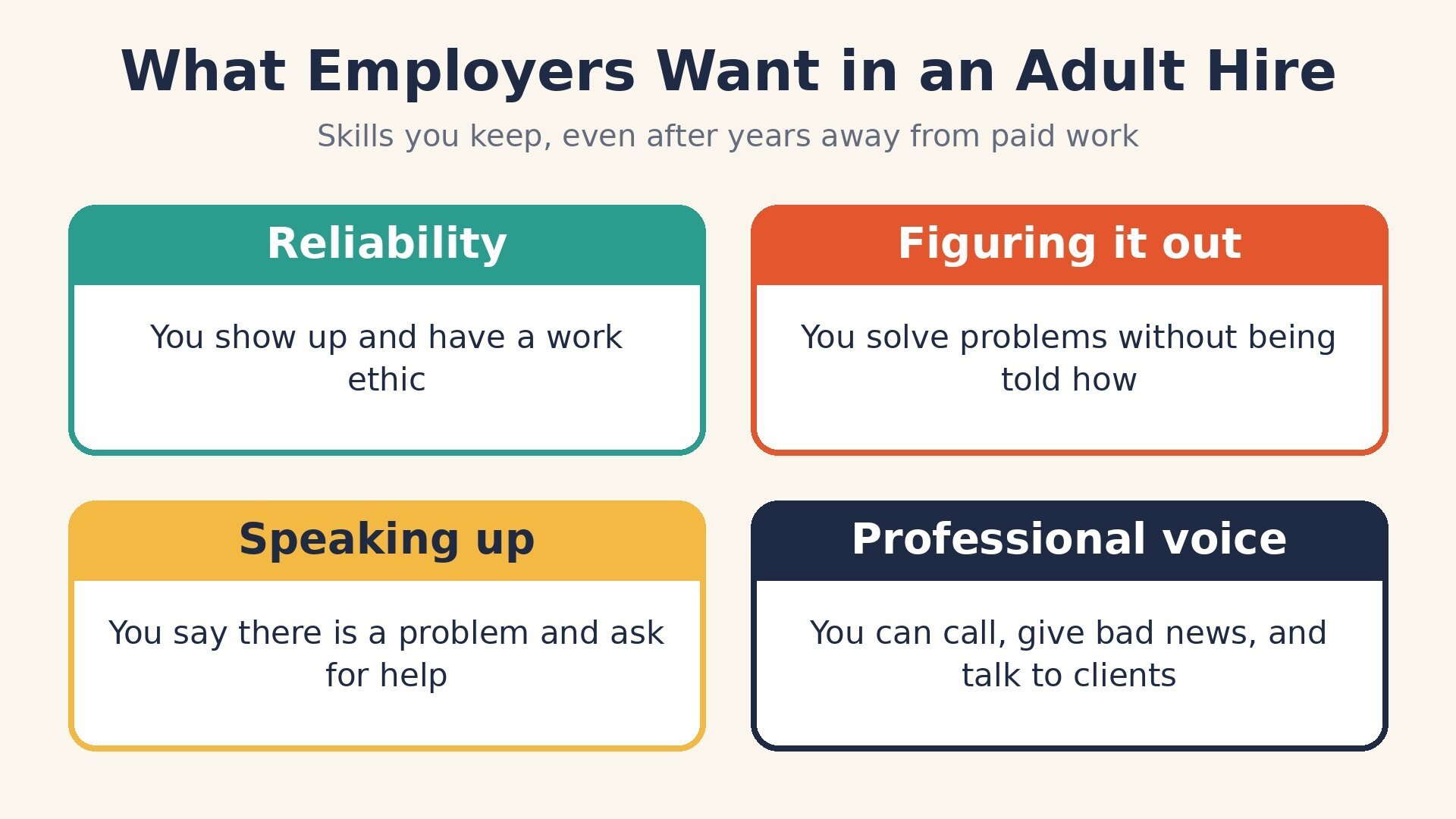
She also shared a trend. Some employers want an adult hire, because many younger professionals who started during COVID may lack basic adult skills, like picking up the phone or giving bad news.
“You do take a hit. Your confidence 100% takes a hit, but you have so many valuable skills. You just need somebody to help you with your resume, because you've got to be able to show what you have done during the time period that you were maybe doing philanthropy work or at home. A lot of the kids coming out of college or young professionals who went through the COVID pandemic sometimes lack something on the how-to-be-an-adult side, how to pick up the phone and call somebody, or how to give somebody bad news, or talk professionally to a client. And so sometimes people want to hire an adult, and that adult might be 40 and has stayed home for five years, and that person looks more attractive to them than the 25-year-old.”
I agree. If I posted a job, the qualification would be adult. I want someone who is reliable, shows up, and can say, "There is a problem I do not know how to handle."
Becoming an Executive Leadership Coach: Coaching vs Consulting
In recruiting, Alicia realized she loved developing people, which she had done since her second year in public accounting. She trained at Georgetown to become an executive leadership coach certified under the ICF. Coaching is about human emotions and development, a big shift for an accounting major. She was among the oldest in her cohort.
I asked about the coaching vs consulting line, since the field feels crowded. Alicia says a coach asks questions, while a consultant shares experience.
Role | What It Does |
|---|---|
Coach | Asks questions so you gain your own insight |
Consultant | Shares experience and advice, like "what I would have done" |
Wren Advisors co-founder Alicia Bond and her partner both have executive experience, which sets the firm apart. Their coaching is value-based and strength-based, and it includes what brings you joy. She believes everyone could use a coach, and she has one herself. With hybrid and remote work, many people no longer get the direct feedback they need.
Making Work Fit Your Family
Alicia says she needed a coach at two transition points. She now believes she did not have to step out entirely.
“I really think that I probably needed a coach at my two transition points. One, when I decided to step out, because I don't think I needed to step out. In hindsight, I can see that there were a lot of opportunities available to me that I just didn't know existed. I'd had two careers, public accounting, which is 60 plus hours a week, and AOL, 60 plus hours a week, and that's all I knew. Subconsciously I knew my family was number one to me, but I had been trying to fit my family into my job, and I really needed someone to help me figure out how to fit my job into my family. I was not equipped to do that myself. So what did I do? I took the job out. I think there would have been a better way.”
Does she regret it? Yes and no. She treasures the time with her kids, and she is happy with where she is now.
Is Your Idea a Hobby or a Business? Advice for Career Transitions
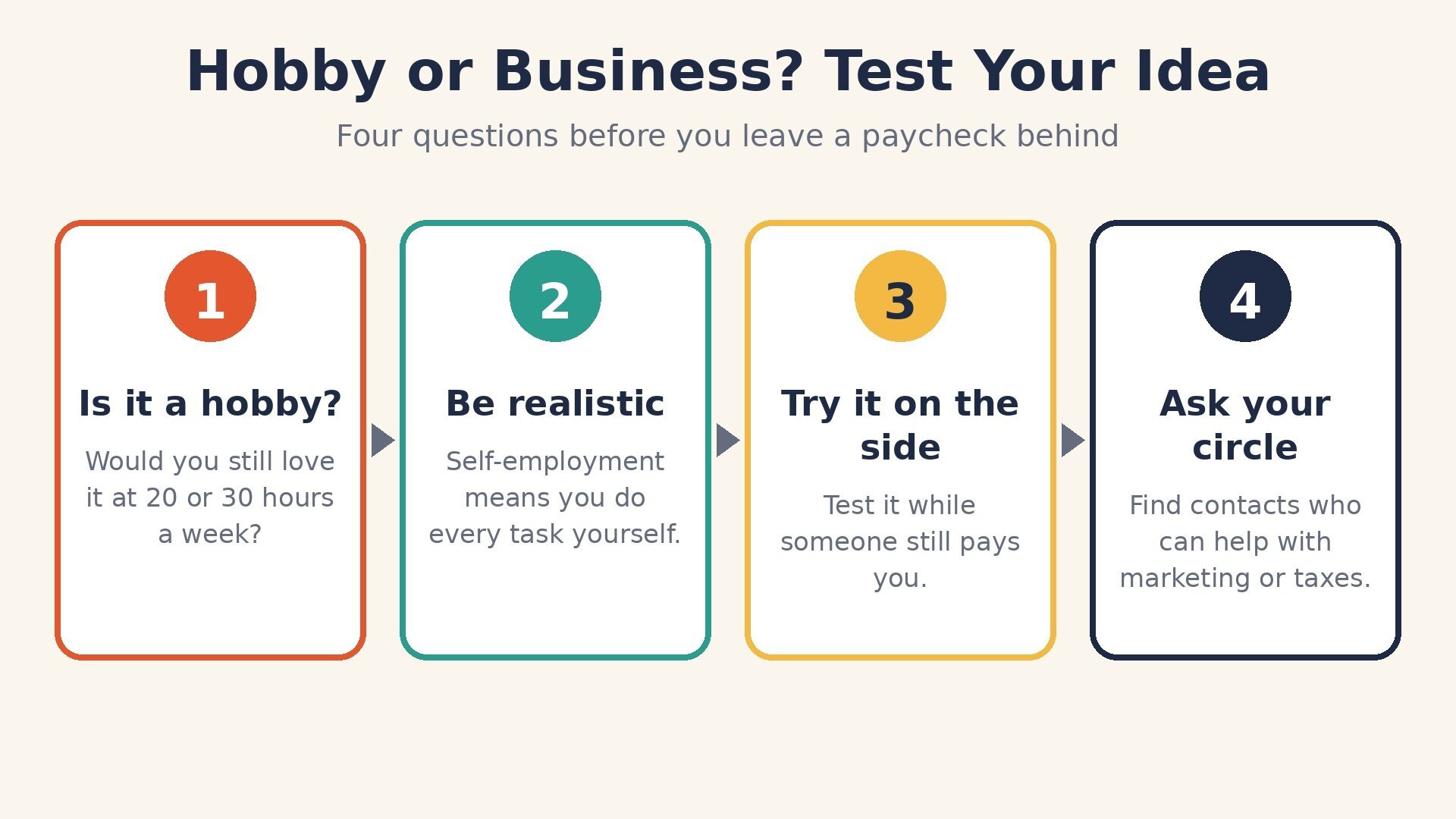
For career transitions for women, Alicia shared advice she learned in recruiting. First, decide whether what you love is a hobby or a career. Baking cookies is fun, but maybe not for 40 hours a week. Then be realistic. When you are self-employed, you do every task. Alicia would rather do a spreadsheet than marketing, and she works on that with her own coach.
Her bigger message is confidence.
Ask if it is a hobby or a business.
Be realistic about the work.
Test your idea on the side.
Ask your contacts for help.
Most women can do more than they think they can.
Alicia's Local Favorites and What She Is On Her Way To
Now an empty nester, Alicia lovesGreat Falls Park and spending time in DC with her daughter. She serves on the board of theMcLean Project for the Arts, and she recommends its newCafé Monet.
What is next? She is building out Wren Advisors, learning golf, and looking ahead to travel. Her husband plans to retire in a couple of years, and she says she is just getting started.
Frequently Asked Questions About Returning to Work
How do you rebuild confidence after years at home?
Expect a hit, then get help showing the skills you used during your break, like leadership, volunteer work, and organization.
What is the difference between coaching and consulting?
A coach asks questions to help you gain insight. A consultant shares experience and advice.
How do you know if a hobby can become a business?
Ask whether you would still love it at 20 or 30 hours a week, and test it on the side first.
Do you need to step out of work completely to balance family?
Not always. Alicia says she wishes a coach had helped her fit her job into her family instead.
Connect With Alicia Bond and Gitika Kaul
You can find Alicia atWren Advisors and onLinkedIn. To find more stories from local women, visitmy website or follow me onInstagram. Thank you to Alicia Bond of Wren Advisors for sharing her story.
Apply to Be a Guest on the On Her Way Podcast
Every woman has a story of ambition, reinvention, or resilience. If you live or work in Bethesda or the DC area and your story could help another woman, I'd love to hear from you.
This podcast is produced by the Icons of Real Estate - #1 Real Estate Podcast Network. If you are a real estate professional, apply to be a guest speaker across the network.
